Chế Biến Ướt (Washed): Sự Tinh Tế Của Khoa Học
Updated: 6/15/2026
Wet Processing
Lam Dong Market
Dữ liệu chính thức
Arabica Reference Price
89,600đ/kg₫/kg
0
The Washed (or Wet) process was developed to maximize control over fermentation and highlight the cleanest, most intrinsic flavors of the coffee bean itself, rather than borrowing flavor from the fruit.
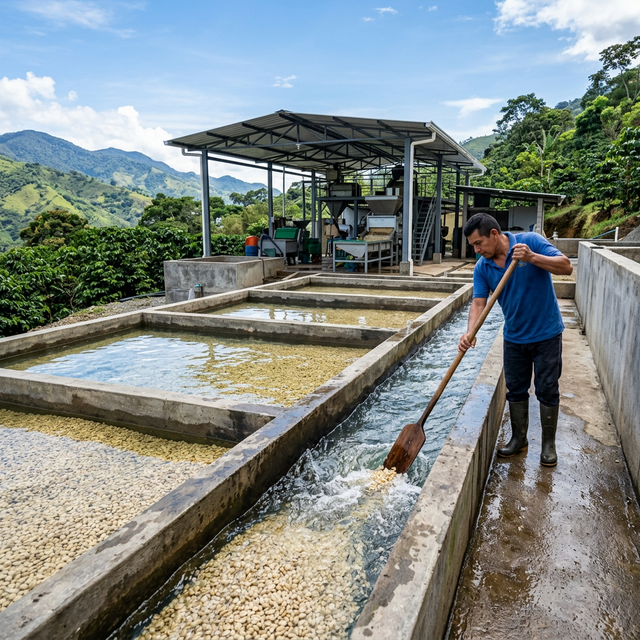
Washing away mucilage in washing channels before drying.
1. Xát vỏ và Lên men (Pulped & Fermentation)
Immediately after harvest, cherries are passed through a depulper to remove the outer skin. The seeds, still covered in sugary mucilage, are placed into fermentation tanks. This fermentation (usually 12-72 hours) uses natural enzymes and microbes to break down the mucilage until it can be easily washed away with clean water.
Fermentation Goal
Unlike other methods, fermentation in the washed process is primarily 'functional' - aimed at breaking down mucilage rather than forcing fruit flavors into the seed.
2. Quản lý nước và Môi trường
The biggest challenge of this method is the massive water consumption and wastewater treatment. The effluent from fermenting and washing (honey water) is highly acidic and organic-rich, requiring strict treatment systems before environmental discharge to prevent polluting local watersheds.
3. Tác động đến hương vị (Flavor Profile)
Washed coffees are renowned for their bright acidity and sharp flavor clarity. Because they are not influenced by the sugars of drying fruit flesh, washed coffees most authentically reflect the characteristics of the varietal and the terroir.
Tính đồng nhất và sạch
The Washed method is the most accurate barometer for the core quality of the coffee bean. The cup is typically clean, smooth, and focuses on floral and citrus notes.