Lên Men Đặc Biệt (Experimental Fermentation): Thúc Đẩy Giới Hạn Mới
Updated: 6/15/2026
Bio-controlled
Cau Dat Market
Dữ liệu chính thức
Specialty Reference Price
89,600đ/kg₫/kg
0
The explosion of the third coffee wave has driven producers to seek novel flavors beyond traditional methods. Experimental Fermentation involves applying scientific techniques—often used in winemaking or probiotic beer brewing—to coffee processing to create unique flavor profiles.
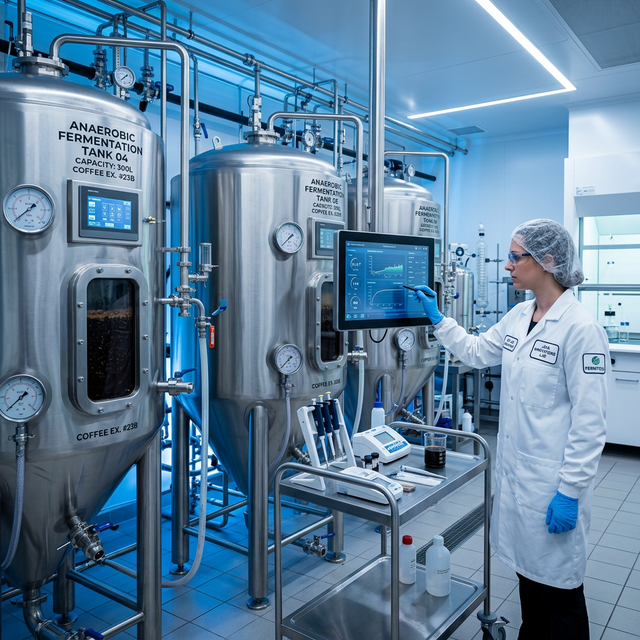
Stainless steel anaerobic fermentation tanks with pressure and temperature controls.
1. Lên men Yếm khí (Anaerobic Fermentation)
Anaerobic fermentation is the most common method in this category. Coffee cherries (or pulped beans) are placed in sealed fermentation tanks, and oxygen is evacuated through a one-way valve. The oxygen-deprived environment forces anaerobic microbes into high activity, breaking down sugars slowly and producing highly complex organic acids (like lactic acid).
| Technique | Environment | Typical Result |
|---|---|---|
| Anaerobic Natural | Zero Oxygen, Whole cherry dried | Winey, Fermented fruits |
| Anaerobic Washed | Zero Oxygen, Pulped and washed | Yogurt-like texture (Lactic) |
2. Carbonic Maceration và Inoculation
Carbonic Maceration shares principles with Anaerobic but goes further: CO2 is actively pumped into the tank to flush out oxygen immediately, dropping the temperature (below 15°C) to extend fermentation up to hundreds of hours. Furthermore, yeast inoculation or co-fermentation with fruits is opening countless new flavor frontiers.
Scientific Precision
Unlike traditional processing, Experimental methods require strict per-minute measurement of pH, Brix (sugar content), and Temperature. Pushed past the threshold, the coffee is completely ruined (over-fermented).
3. Tác động đến hương vị (Flavor Profile)
The flavor profile of experimentally fermented coffee often shatters the expectations of average drinkers. You might find notes of marshmallow, passionfruit bubblegum, dark rum, or incredibly intense strawberry jam.
Tính tiên phong
Experimental Fermentation elevates the value of Vietnamese coffee to the highest peaks at international auctions, proving the excellent R&D capabilities of the new generation of farmers.