Mô Hình Nhà Máy Sơ Chế Mini: Kiến Thức Đầu Tư Cơ Bản
Consulting Group
Core Infrastructure
National Floor Price
Dữ liệu chính thức
Raw Material Base Price
89,600đ/kg₫/kg
0
Upgrading from selling fresh cherries to processing green beans is a crucial turning point for value chain integration. The Micro Wet Mill model empowers smallholder farmers or cooperatives to own a closed-loop process with a reasonable initial investment while still meeting Specialty Coffee standards.
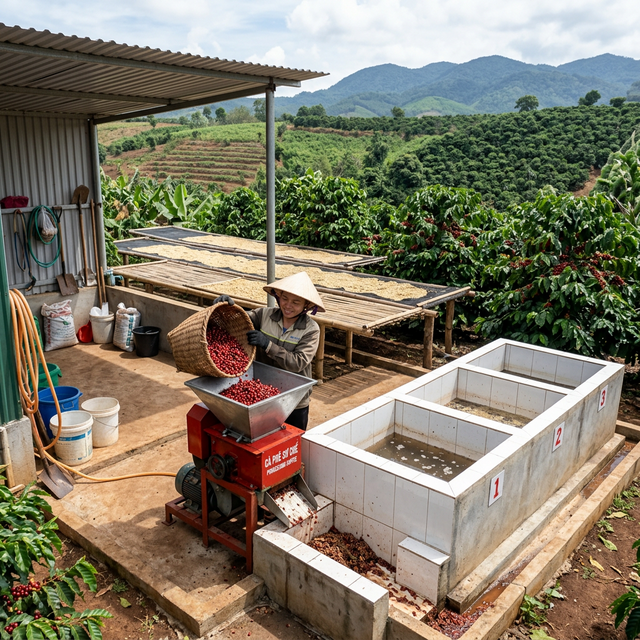
A fully integrated compact micro wet mill.
1. Đặc điểm cấu trúc trạm sơ chế (Wet Mill Topology)
A standard micro mill doesn't require massive acreage (usually under 500m2) but must be designed along sloped terrain (topology) to utilize gravity (gravity-fed). This minimizes pump usage, saves energy, and prevents bean damage during transport.
4 Mandatory Functional Clusters
- Receiving & Siphon: Flotation tank for defect removal.
- Depulper Module: Disc or drum pulper (500-1000kg/h).
- Fermentation Tanks: Typically tiled or composite tanks.
- Drying Area: Raised African beds with greenhouse cover.
2. Phân tích chi phí & Lựa chọn công nghệ
The biggest difference between a commercial mill and a micro mill is the demucilaging technology. Micro mills often prioritize slow natural fermentation on drying beds (Honey process) instead of investing in mechanical mucilage removers that consume thousands of liters of water and electricity.
3. Quản lý vận hành chuẩn SCA
Hardware (the mill) accounts for only 30% of success; the remaining 70% comes from operational management capability. Micro mills need to implement SCA Lot Tracking standards from the very first batch. All data regarding cherry Brix, tank pH, and daily moisture must be digitized for seamless Traceability when pitching to international roasters.
Bài toán thực tiễn
Setting up a micro mill is not just about processing coffee; it's about building an Estate Coffee brand. Gross profit margins can increase by 150% to 300% compared to selling raw cherries.